Life on the periphery
- Alberto Rizzotti
- Feb 6
- 3 min read
Today was not the first day that our “trusted” Google Maps behaved erratically. We had entered directions for Nyungwe National Park, which should pretty much have been a straight shot, a pretty routine one-hour-forty-five minutes’ drive on a major road. Soon though, the “voice” told us to turn left into one of those rutty dirt roads that we’ve grown quite familiar with. Oh, oh!


As it turned out, what we had thought would be a short detour turned out to be a three-hour ordeal, through some of the most remote villages in the country. Three hours without seeing a car, even a motorcycle; the only vehicles were old bikes laden to the point where imagination goes blank, being pushed along the road by struggling folks who had no strength left.
There were however many people walking, watching over their animals, kids heading to school, men and women working at the most basic of tasks.
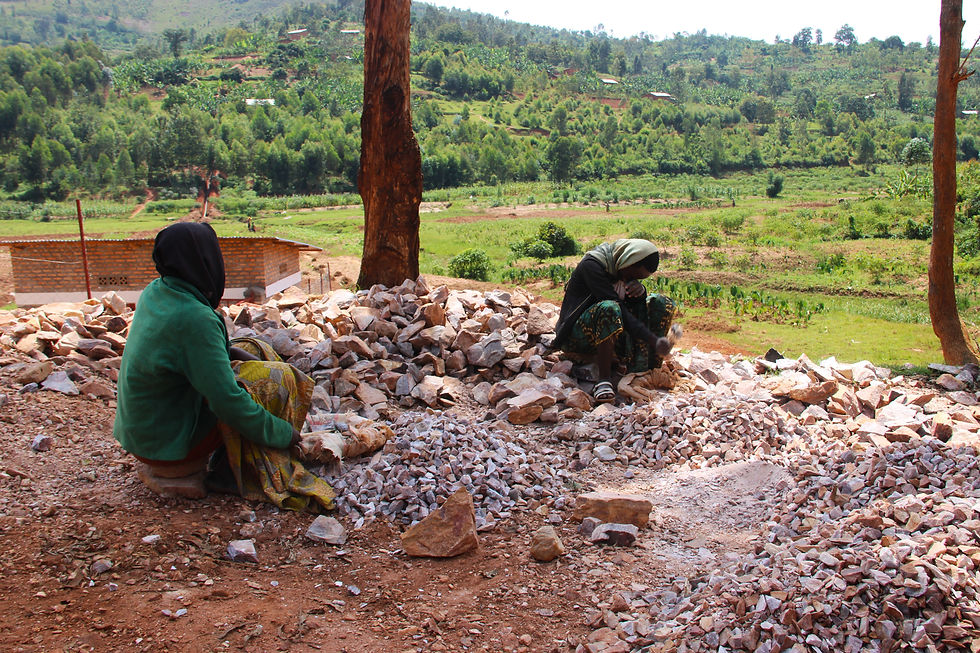

And we came into contact with all, sharing a bag of lollipops with perhaps thirty or so people along the way, mostly children. Or simply saying hello to people who did not speak our language, who were wondering what the hell we were doing driving our red SUV through these places that I doubt have seen many cars, let alone tourists. We drove through many villages with no name.


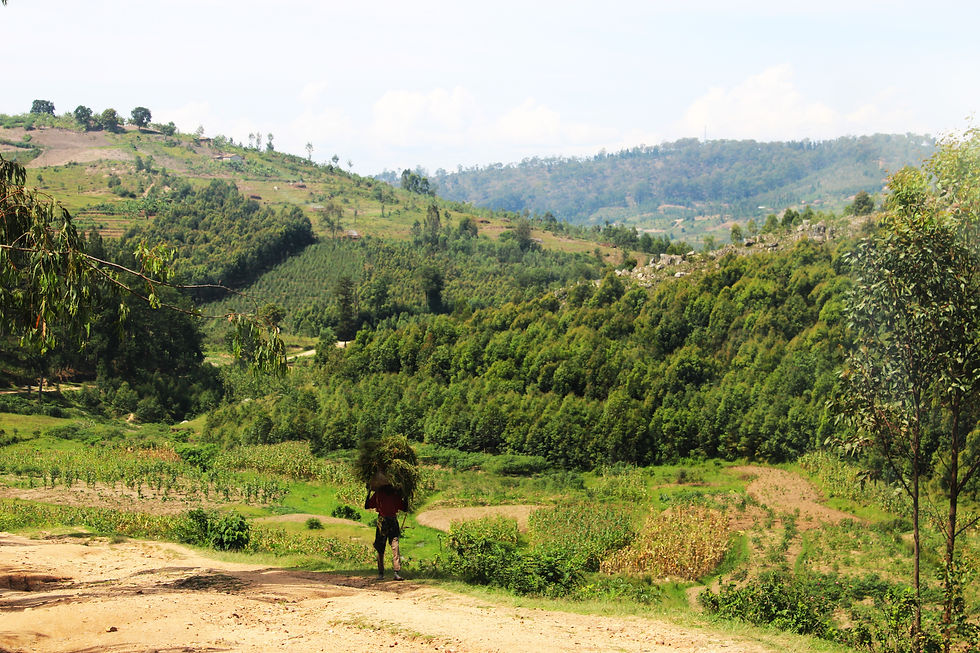


And the best part is that we ended up loving it! It made for a wonderful morning, witnessing first-hand what life is like on the periphery. The scenery was dramatic, with mile upon mile of cultivated hillsides, all achieved with nothing but a hoe and a lot of sweat.


As I had mentioned, our destination had been the Nyungwe National Park, one of Africa’s oldest; a rainforest of great dimensions. It is known for its colonies of chimpanzees and many types of monkeys, and a dramatic, long, canopy suspended bridge that I had looked forward to crossing on foot.
But we had anticipated arriving much earlier. By the time we reached the park headquarters, it was time for a late lunch and way too late for any chimp tracking. We would have been delighted with just a walk over the canopy bridge, but when we were asked for $140 per person ($280), which included a park entrance fee of $100 each, we opted to abstain. It’s not about being cheap, but nearly $300 for just walking along a bridge, no matter how cool, seemed just a tad excessive, and it’s not like we are wanting for experiences. Somehow, they manage to find us, just fine.
The road does go through the park however, and we were able to see L’Hoest monkey groups gathered along it.


We continued on and entered Rwanda’s vast tea plantations, which reminded us of our time in Malaysia, until we reached our setting for the next couple of days, the town of Cyangugu on the shore of Lake Kivu (Africa’s eight largest and one of the world’s deepest).

Cyangugu is also a border town. The western shore of Lake Kivu belongs to the Democratic Republic of the Congo, one of the world’s most dangerous places. Our hotel sits right across from the town of Bukayu, in the DRC.


We look forward to exploring the area tomorrow, and once again, we thank you for journeying along with us. Until tomorrow!


What are the rocks the women break up used for?
I absolutely love reading about your adventures and looking forward to following the rest of your journey there! Stay safe!!